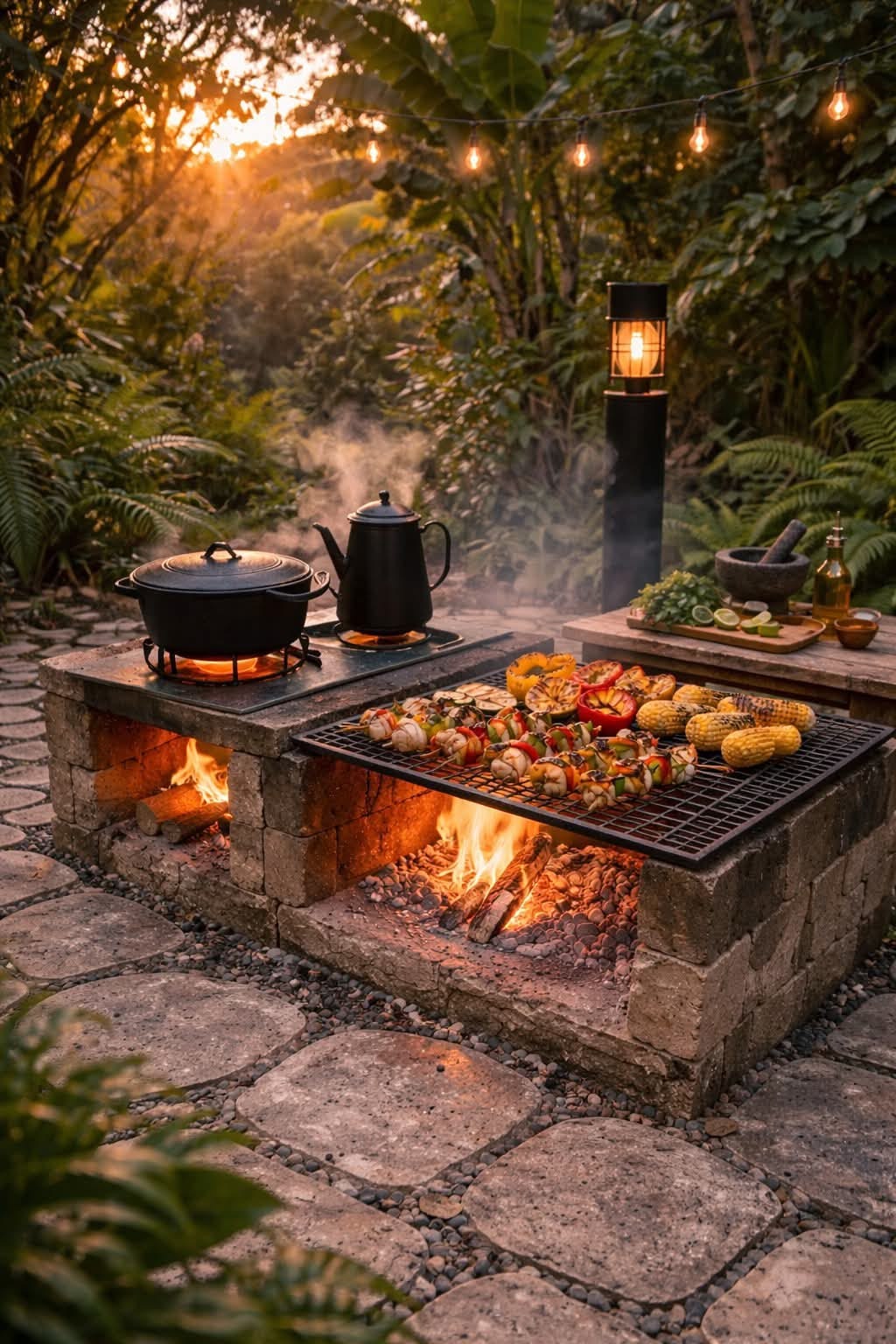
Assessing Your Cooking Style and Frequency
Before looking at any grill, ask yourself three simple questions. First, how often will you cook? If you grill once or twice per month, a basic charcoal kettle is sufficient. If you www.guibbqirvine.com grill three or more times per week, a gas grill offers convenience. Second, what types of food do you want to cook? Burgers and hot dogs work on any grill. Low and slow smoked brisket requires a grill with excellent temperature control, such as a kamado or pellet grill. Third, how many people do you typically feed? A small 200-square-inch grill is fine for two people. A family of four needs at least 400 square inches. For parties of six or more, look for 600 square inches or more. Being honest about your habits prevents overspending on features you will never use.
Charcoal Grills: Flavor and Affordability
Charcoal grills are the classic choice for BBQ enthusiasts who prioritize smoky flavor above all else. They are typically the most affordable, with basic kettle grills starting under 100.Charcoalburnshotterthangas,reaching700°Formore,whichisexcellentforsearingsteaks.However,theyrequiremoretimeandskill.Youmustlightcharcoal,wait15to20minutesforittoashover,thenmanageventsfortemperaturecontrol.TheiconicWeberKettleisthebest−sellingcharcoalgrillforgoodreason.Itisversatile,durable,andhasahugecommunityofrecipes.Forseriouspitmasters,theWeberSmokeyMountainisadedicatedsmokerthatexcelsatlowandslowcooking.Kamado−stylegrillsliketheBigGreenEggaremadeofceramic,providingincredibleheatretentionandfuelefficiency,buttheyareheavyandexpensive,oftenexceeding100.Charcoalburnshotterthangas,reaching700°Formore,whichisexcellentforsearingsteaks.However,theyrequiremoretimeandskill.Youmustlightcharcoal,wait15to20minutesforittoashover,thenmanageventsfortemperaturecontrol.TheiconicWeberKettleisthebest−sellingcharcoalgrillforgoodreason.Itisversatile,durable,andhasahugecommunityofrecipes.Forseriouspitmasters,theWeberSmokeyMountainisadedicatedsmokerthatexcelsatlowandslowcooking.Kamado−stylegrillsliketheBigGreenEggaremadeofceramic,providingincredibleheatretentionandfuelefficiency,buttheyareheavyandexpensive,oftenexceeding800.
Gas Grills: Convenience and Control
Gas grills run on propane tanks or natural gas lines. They heat up in 5 to 10 minutes with the push of a button or turn of a knob. Temperature control is as simple as turning a dial, making gas grills ideal for weekday dinners. Propane tanks are portable and widely available. Natural gas is cheaper long-term but requires professional installation and a permanent gas line. The downside is less smoky flavor compared to charcoal, though you can add smoker boxes. Look for gas grills with at least two burners, preferably three or four. Burners should run front-to-back rather than left-to-right for better indirect cooking. Stainless steel burners last longer than aluminum or cast iron. Avoid very cheap gas grills under 200,astheyhaveunevenheatdistributionandrustquickly.ReputablebrandsincludeWeber,Napoleon,andBroilKing.Expecttospend200,astheyhaveunevenheatdistributionandrustquickly.ReputablebrandsincludeWeber,Napoleon,andBroilKing.Expecttospend400 to $1,000 for a quality gas grill that lasts 5 to 10 years.
Pellet Grills: The Best of Both Worlds
Pellet grills are the fastest-growing segment in BBQ. They run on electricity and use compressed wood pellets for both fuel and smoke. A digital controller maintains your exact set temperature automatically, from 180°F for smoking up to 500°F for grilling. This means you get true wood-fired flavor with gas-like convenience. Pellet grills excel at slow cooking and smoking but are not as good for high-heat searing, though some models include a sear plate. The main drawbacks are the need for electricity, which limits portability, and the ongoing cost of pellets. A 20-pound bag typically costs 15to15to25 and lasts for 10 to 20 hours of cooking. Popular brands include Traeger, Pit Boss, and Green Mountain Grills. Entry-level models start around 400,whilehigh−endversionsexceed400,whilehigh−endversionsexceed1,500. Pellet grills are perfect for people who love smoked brisket and ribs but do not want to babysit a fire all day.
Essential Features and Budget Considerations
Regardless of which type you choose, certain features are non-negotiable. A built-in lid thermometer is essential, though often inaccurate; buy a separate digital probe thermometer for accuracy. Sturdy wheels allow you to move the grill easily. Porcelain-enameled cast iron grates retain heat well and resist rust. A removable ash catcher simplifies cleaning. For charcoal grills, an adjustable charcoal grate lets you raise or lower the coals to control heat intensity. For gas grills, look for electronic ignition and flavorizer bars that vaporize drippings for more smoky taste. Set a realistic budget including accessories. A 150grillplus150grillplus50 for tools, a chimney starter, and a thermometer is better than a $300 grill with nothing else. Remember, the most expensive grill does not make great BBQ. Practice and technique matter far more than price. Start with a reliable mid-range option within your budget, then upgrade after you have mastered the basics.